Modern spaces are bigger and more complex than ever. Whether it’s a shopping mall, a hospital, or a large resort, finding your way around isn’t always as easy as it should be.
Even with maps and signs everywhere, people still get lost.
The problem isn’t the space, it’s the experience
Most venues rely on static tools like maps and signage. They provide information, but they don’t really guide people in a natural way.
In reality, visitors often look at a map and feel confused, miss important signs, take a wrong turn, or end up asking someone for help. It interrupts their journey and adds unnecessary frustration.
Why traditional wayfinding doesn’t work for everyone
Maps require people to stop, read, and figure things out. But that’s not how most people move through spaces. They’re usually in a hurry, distracted, or unfamiliar with the environment.
Instead of helping, these tools can sometimes make things more complicated.
A more natural way to move through spaces
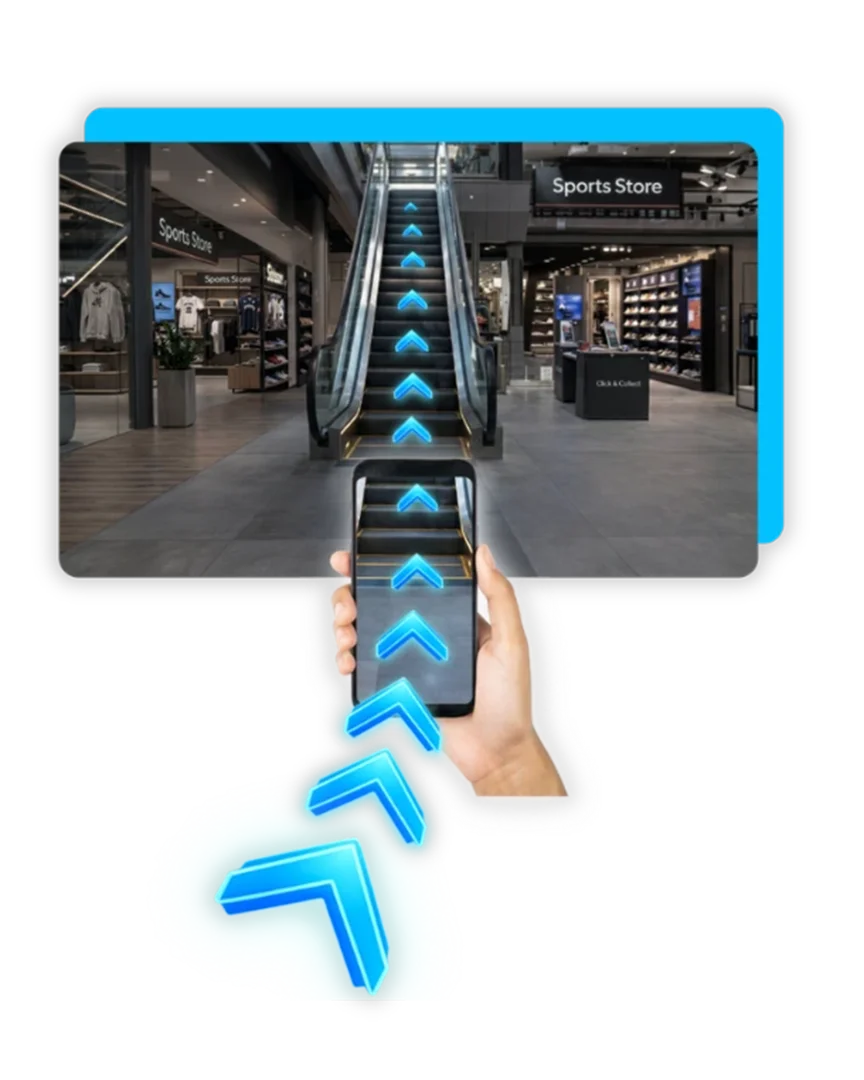
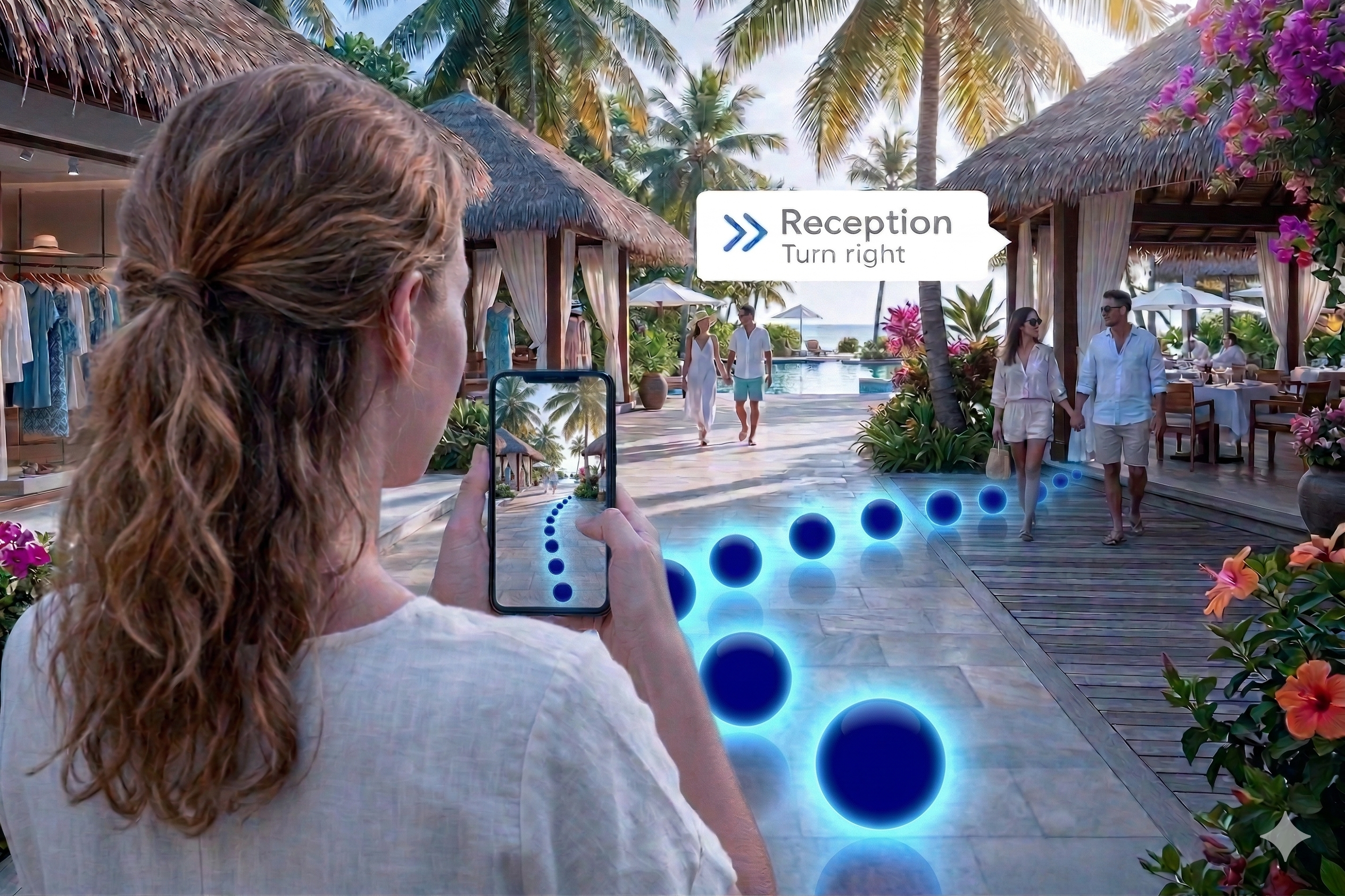
AR navigation changes the experience completely. Instead of interpreting directions, people simply follow a clear path in front of them.
It feels intuitive, almost like being guided step by step, without needing to think about where to go next.
What changes for the visitor
When navigation becomes simple, everything else improves.
People don’t have to stop and double-check directions. They move more confidently, reach their destination faster, and feel more comfortable throughout their visit.
Where this makes a real difference
In malls, visitors can find stores without frustration. In hospitals, it helps people get where they need to go without added stress. In hotels and resorts, it makes the overall experience feel smoother and more premium.
In any large or complex space, better navigation changes how people interact with the environment.
Why it matters more than it seems
Getting lost might seem like a small issue, but it has a big impact on how people experience a place.
When navigation feels effortless, visitors feel more in control, more relaxed, and more positive about the space around them.
And that’s what makes the difference.